
US Army Rangers
As with all special operations forces, the U.S. Army Rangers report to the Joint Special Operations Command (JSOC) when in hostile or war situations. Along with the Rangers, which consist of one active regiment (the 75th Ranger Regiment) with three battalions (1st, 2nd and 3rd Bat), the U.S. Army Special Operations Command includes Army National Guard, civil affairs, psychological operations and chemical reconnaissance groups. The Ranger Regiment is a light infantry combat unit the falls under the administrative control of the US Army Special Operations Command (USASOC).Rangers lead the way as the motto goes. The 75th Ranger Regiment is a light infantry unit under the United States Army Special Operations Command (USASOC). Light infantry is a select group of soldiers who originally opened the way for the main infantry using various delay tactics to slow the enemy lines down.
Today the Rangers are extensively trained to infiltrate enemy lines by land, sea, and air. They execute special missions and operations. The 75th Ranger Regiment is an extremely flexible, well trained, and deployable airborne unit used for special operations. They perform a number of highly specialized missions including direct action, reconnaissance, hostage rescue, clandestine roles, and site exploitation.
Rangers are the spearhead of the Army’s special operations forces. Ready to deploy by land, air and sea anywhere in the world at a moment’s notice to respond to the latest contingency or crisis. Rangers specialize in rapid infantry assault, night fighting and airfield seizure. The Rangers are trained to infiltrate and exit by air, land or sea and have the capability to conduct conventional or special light-infantry operations. In many cases, the Ranger platoon will serve as the security element, the outer cordon, and often act as the Quick Reaction Force (QRF).
The 75th Ranger Regiment plans and conducts special military operations in support of US policy and objectives. The unit is specially organized, equipped, and trained soldiers provide the National Command Authority (NCA) the capability to rapidly deploy a credible military force to any region of the world. The Ranger Regiment specializes in executing Direct Action (DA) missions. Moreover, they are the Army’s elite force for raid missions and airfield seizure. The Regiment maintains a high level of alert – a battalion is able to mobilize and deploy as quickly as 18 hours after notification (N+18). Because of their alert status, they must also maintain the following capabilities: infiltration/exfiltration by land, air, and sea; recovery of personnel, and special light-infantry operations. The Ranger battalions also train for other actions listed in their Mission Essential Task List (METL), which includes movement to contact, ambush, reconnaissance, airborne assaults, air assaults, and hasty defense.
According to the JSOC, the Ranger Regiment has taken part in every major combat operation since the end of the Vietnam War. In many cases, they are supported by aircraft from the 160th Special Operations Aviations Regiment — better known as the “Night Stalkers” — which use state-of-the-art modified rotary-wing aircraft and equipment to assist all special operations forces from the air. Want to challenge yourself? Check out the Army Special Forces Workout to prepare you for Ranger School.
In the current War on Terror, the Rangers carried off a bold airborne insertion to Objective RHINO on the way to secure the airfield at Kandahar, Afghanistan. Later, during ENDURING FREEDOM, the Rangers were part of the QRF responding during the battle of Takur Ghar where US Navy SEAL PO Neil Roberts fell from an MH-47 helicopter at a place later renamed Roberts Ridge – this was the most deadly firefight of Operation ANACONDA. Army Rangers have participated in nearly every single major objective in Afghanistan.
The 75th Ranger Regiment is comprised of a Regimental Headquarters, 3 Ranger Infantry Battalions and one Special Troops Battalion. The 3rd Battalion and the Special Troops Battalion are located with the Regimental Headquarters at Fort Benning Georgia, while the other 2 Ranger Battalions are geographically separated.
Ranger School – No Excuse Leadership

 A great compilation of U.S. Army Ranger School vignettes designed to demonstrate how one can achieve the mental toughness to succeed…no matter what the adversity. Though exceptionally diverse in background and experience, the Ranger students chronicled in this book reveal that they all had one thing in common…tenacity, perseverance and a desire to be one of the best. RANGER SCHOOL, NO EXCUSE LEADERSHIP is an excellent addition to any leadership or business manager development program and should become as worn, tabbed and dog eared as any well read ‘-10’ equipment maintenance manual. Rangers Lead The Way!
Army Rangers Video
Command and Control
The Rangers perform under various command structures. They work as a part of Joint Special Operations Task Force, Army Special Operations Task Force, or as part of an Army Joint Task Force. The various mission and mission types the Rangers perform make them highly flexibly in their role for any mission. They may begin under the command and control of one task force and end up under the control and command of a different task force depending on their roles and operations.
Ranger Training
Rangers train extensively for their duty. They must attend nine weeks of Basic Combat Training, Advanced Individual Training or thirteen weeks of One Station Unit Training. Three weeks of Pre-RASP preparatory course, eight more weeks in RASP, Airborne School, two-weeks of pre-Ranger courses, and eight and half weeks of Ranger School. Rangers are then assigned to a Battalion. Training continues with a number of additional courses that includes military free-fall, combat diver, survival, evasion, emergency medicine, and much more.
Ranger Combat Gear
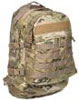
MultiCam Gear
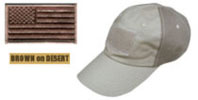
Condor Tactical Cap with Velcro Patch
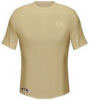
Under Armour Tactical
Somalia?
In 1993 the 75th Ranger Regiment (official website) was deployed to Somalia to help the UN’s humanitarian efforts. The ensuing battle that took place in Somalia on October 3 and 4 in 1993 was officially called Mogadishu, but the battle is well known by many names including Black Hawk Down, Battle of the Black Sea, or Day of the Rangers by the Somalis.
The United States Operations Forces was made up of Bravo Company 3rd Battalion, the 160th Special Operations Aviation Regiment (Airborne) and the 1st Special Forces Operational Detachment-Delta better known as Delta Force, and the Rangers. The joint effort was strategically planned with each unit performing specialized tasks. The goal of the assault was to capture warlord Moahmed Farrah Aidid’s foreign minister Omar Salad Elmi and his political advisor, Mahamed Hassan Awale.
The operation did not go as planned. Somali citizens and their militia formed barriers and began fighting back. The battle that was meant to be a 30 minute mission dragged on for two days. The resulting numbers of killed and wounded on both sides have been questionable. The official numbers claim that 18 Americans were killed and over 700 Somalis were killed. It was one of the most intense urban battles the 75th Rangers were involved in since Viet Nam.
Afghanistan Campaign
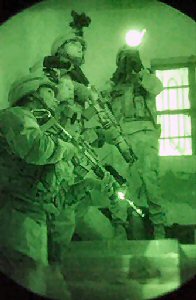 The United States was attacked by terrorists on September 11, 2001 and the Rangers were called up in October to conduct two initial missions in Afghanistan known as “Objective Rhino” and “Objective Gecko” as part of Operation Enduring Freedom. The 3rd Battalion of the Regiment parachuted onto the Afghan landing strip, fought and destroyed Taliban forces in the area, determined the feasibility of using the landing strip, and established a point of operation for refueling for the next objective – Objective Gecko.
Objective Gecko was conducted by Delta Force and Rangers. Their goal was to raid a large compound where Mullah Mohammed Omar was staying in the Kandahar. The Rangers provided security perimeter around the Delta Force operation.
If the raids were meant to be of propaganda and psychological value they were successful. There were no Taliban in the compound at the time and very little intelligence was gleaned from the operation. However it was a show of American force while other covert operations continued throughout Afghanistan against the Taliban.
Iraq Campaign
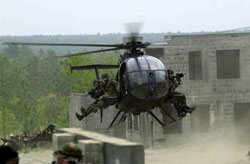 The Rangers conducted numerous classified missions as a part of Operation Iraqi Freedom, including securing airfields, conducting urban raids, and successfully freeing Army POW PFC. Jessica Lynch. The nighttime raid of a hospital in Nasiriyah by a team of Joint Special Operations Task Force that included the Rangers and led to securing of Jessica Lynch and the bodies of eight more American soldiers brought the Rangers public acclaim and some controversy over the details of that night.
At the Battle of Hadithah Dam the Regiment took part in securing the Dam in order to protect it from the enemy as well as use it as a point of communication for other forces over the Euphrates River.
In March 2003 they were deployed to Iraq to seize “Object Serpent” as part of Operation Iraqi Freedom to secure Baghdad. The 75th Ranger Regiment was deployed on numerous operations in Iraq since 2003.
The Rangers of the 75th Ranger Regiment continue to be an effective light infantry unit combating terrorists, leading raids, patrolling, gathering intelligence, and backing up for other units such as Special Forces. They continue to be trained and prepared to go a moment’s notice behind enemy lines and lead the way for military troops.
Are You Ready to Lead the Way?
The 75th Ranger Regiment is a flexible, highly trained and rapidly deployable light infantry force with specialized skills that enable it to be employed against a variety of conventional and Special Operations targets.
Candidates must pass a stringent orientation course before selection to Ranger School. While there, they’ll face the kinds of physical and mental challenges that will serve as a foundation for membership in to one of the Army’s elite combat units.
To become a member of the 75th Ranger Regiment you must begin with the nine weeks of Basic Training. Upon completion of Basic Training you will then attend Advanced Individual Training to obtain a Military Occupational Specialty (MOS). This training varies in length depending on the selected MOS. Next you must complete Airborne training. Upon graduation of Airborne School you will be assigned to the 75th Ranger Regiment to attend the Ranger Indoctrination Program (RIP).
If you pass each of the required training schools and RIP, you will receive an assignment to either the 75th Ranger Regiment Headquarters or one of the three Ranger Battalions.
Recognizing that I volunteered as a Ranger, fully knowing the hazards of my chosen profession, I will always endeavor to uphold the prestige, honor, and high esprit de corps of the Rangers.
Acknowledging the fact that a Ranger is a more elite soldier who arrives at the cutting edge of battle by land, sea, or air, I accept the fact that as a Ranger my country expects me to move further, faster, and fight harder than any other soldier.
Never shall I fail my comrades I will always keep myself mentally alert, physically strong, and morally straight and I will shoulder more than my share of the task whatever it may be, one hundred percent and then some.
Gallantly will I show the world that I am a specially selected and well trained soldier. My courtesy to superior officers, neatness of dress, and care of equipment shall set the example for others to follow.
Energetically will I meet the enemies of my country. I shall defeat them on the field of battle for I am better trained and will fight with all my might. Surrender is not a Ranger word. I will never leave a fallen comrade to fall into the hands of the enemy and under no circumstances will I ever embarrass my country.
Readily will I display the intestinal fortitude required to fight on to the Ranger objective and complete the mission, though I be the lone survivor.
Check out our new section for specific information on Physical Fitness Preparation for Army Ranger School.
Ranger School – No Excuse Leadership
A great compilation of U.S. Army Ranger School vignettes designed to demonstrate how one can achieve the mental toughness to succeed…no matter what the adversity. Though exceptionally diverse in background and experience, the Ranger students chronicled in this book reveal that they all had one thing in common…tenacity, perseverance and a desire to be one of the best. RANGER SCHOOL, NO EXCUSE LEADERSHIP is an excellent addition to any leadership or business manager development program and should become as worn, tabbed and dog eared as any well read ‘-10’ equipment maintenance manual. Rangers Lead The Way!
Special Operations in Iraq
 This sensational book reveals the true and compelling story of the Special Force units of the Coalition, such as the SAS, SBS and Delta Force who worked in the shadows, often unseen, unheard and unsung. It describes their missions behind the lines from the early days, well before hostilities opened formally. It was an open secret that groups were deployed probably operating in the western desert against Saddam’s forces and the Scud missile threat. What was actually going on is revealed here and until now their roles and actions have not been described in any detail.
These are thrilling tales of incredible daring and endurance told by men whose courage and military skills are inspiring. The book also covers operations such as the spectacular rescue of POW Private Lynch and the secret operations to target Saddam and other leaders of his regime of terror.
Among Warriors in Iraq
 Join Big Hungry, Kentucky Rife, Serpico and Jedi Knight for a harrowing journey into the heart of the Iraqi insurgency. A former Marine infantryman, Tucker follows the warriors of the 101st Airborne Division in Mosul and the 82nd Airborne and 10th Mountain Divisions in Fallujah during 19 weeks of urban warfare in late 2003 and early 2004. In declaratives one might describe as debased Hemingway on speed, Tucker tags along for counter-IED (improvised explosive devices) patrols and zero-dark-30 (predawn) raids, capturing the adrenaline-laced urgency of urban combat against a hidden enemy. His conversations with troopers are refreshingly authentic; his analysis of the politics of Iraq tends toward open advocacy for the Kurds and a separate state of Kurdistan. (Tucker is the author of Hell Is Over: Voices of the Kurds After Saddam.) But his gritty firsthand account is packed with detail: from the slow ballet of “scoping roof tops and alley corners,” the excruciating tension of disarming IEDs and the frenetic choreography of urban combat to the children who are never far away and are always quick with a smile, a wave and an enthusiastic “Amerikee!” Several impressive accounts of the second Iraq War have appeared already from embedded journalists, but few are as personal and edgy as Tucker’s.
Lone Survivor
 Four US Navy SEALS departed one clear night in early July, 2005 for the mountainous Afghanistan-Pakistan border for a reconnaissance mission. Their task was to document the activity of an al Qaeda leader rumored to have a small army in a Taliban stronghold. Five days later, only one of those Navy SEALS made it out alive.
This is the story of the only survivor of Operation Redwing, US Navy SEAL Petty Officer Marcus Luttrell, and the extraordinary firefight that led to the largest loss of life in American Navy SEAL history. Lt. Michael P. Murphy led the team of PO2 Luttrell, PO2 Dietz and PO2 Axelso. Luttrell fought valiantly beside his teammates until he was the only one left alive, blasted by an RPG into a place where his pursuers could not find him. Over the next four days, terribly injured and presumed dead, Luttrell crawled for miles through the mountains and was taken in by sympathetic villagers who risked their lives to keep him safe from surrounding Taliban warriors.
The Delta Force
 The 1st SFOD-Delta (Delta force) is one the Federal Government’s CT (Counter Terrorist) groups. Also known as CAG (Combat Applications Group) the Pentagon manages to tightly control what is known about this Unit. Their soldiers are recruited from the U.S. Army, mainly from the Special Forces Green Berets and Rangers. Their main compound is in a remote area of Fort Bragg and it is rumored that up to 2,500 personnel are present at this facility.
Col. Charlie Beckwith was the founder and first commanding officer of Special Forces Operational Detatchment-Delta, aka Delta Force. Col. Beckwith’s book begins with his exchange service as a Special Forces Captain with the British Special Air Service. The SAS made such an impression on Col. Beckwith that he designed Delta’s organization, selection and training on the British SAS model.
The book covers Col. Beckwith’s service in Vietnam, with the precursor of Delta, whose mission was to go behind enemy lines and locate NVA and VC units. He continues with his battles with U.S. Army brass to get Delta established as a counter-terrorism unit and finishes the book with the aborted rescue attempt of the American hostages in Iran. The book gives an insight of Delta Force as it was first conceived and organized by it’s creator.
Masters of Chaos
The wars in Afghanistan and Iraq have given the U.S. Army’s Special Forces, also known as the Green Berets, a central role in American military action like never before. Several hundred U.S. Special Forces operators helped a motley band of Afghan rebels orchestrate a stunning rout when they overthrew the Taliban after 9/11. In Iraq, as journalist Linda Robinson explains in Masters of Chaos: The Secret History of the Special Forces, Special Forces units were the main U.S. elements on the ground in the northern and western regions of the country, where they defeated government forces that outnumbered them many times over. Robinson tells the story of the Special Forces through the eyes of a few of its more colorful personalities, men with call signs like Rawhide and Killer. She follows them around the world from Panama and El Salvador to Somalia, Kosovo, and, finally, Afghanistan and Iraq. Surprisingly, however, she devotes only a few pages to the Green Beret-led victory in Afghanistan, even though it was arguably their greatest achievement since they were created after World War II.
Ranger School
Inside The Delta Force

The Special Ops Workout

Army Officer’s Guide

Ranger Handbook

US Special Forces Guide

Ranger Black and Gold


