
How to Do More Push Ups
Pushups are an integral part of military and law enforcement physical fitness. This exercise is a part of military service’s physical fitness test including the US Army, Air Force, and Navy. It is universally seen as a test of your upper body strength and is a mainstay in most physical fitness programs. Additionally, Special Operations Forces (SOF) take pride in performing challenging versions of the push up to put their bodies to the test, such as core training with push ups. Training to increase your push up performance is important – whether you are a US Army soldier preparing for your Physical Fitness Test, or a trainee conditioning before Basic Training, or someone preparing for the FBI Academy. If you expect to succeed in advanced elite training such as Army Ranger School or Airborne School , make sure you are able to accomplish a lot of push ups – because you will be tested!
To increase your ability to do push ups and to increase your strength, you will need to vary your workouts. With any exercise, whether you’re using your own body weight, free weights or machines, if the resistance doesn’t increase, your muscles won’t be overloaded and the stimulus these fibers need to grow in size will be missing. Think about it: if you work up to three or four sets of 25 push-ups, how hard can each repetition be? You’d build local muscular endurance, but you wouldn’t be any stronger. Say a person doing bicep curls can do three sets of 20 reps with 15 pounds: wouldn’t you think they could probably do one set of 10 reps with 20 pounds? That’s what they would need to do to make their biceps grow stronger and bigger. However, there are a few ways you can increase the resistance of your push-ups.
Are you motivated? Learn about Army Special Forces.
Got What it takes? Check out the Special Forces Qualification Course
Deploying soon? Check out our Afghanistan Gear List and prepare for your deployment in support of Operation ENDURING FREEDOM.
Search Your Army Records
Looking for historical information such as old class photos or rosters of your Basic Training class? Have questions about your previous Army units or want access to past records? Try our comprehensive military records search resource
ASVAB Practice Tests
 The Ultimate ASVAB Practice Pack provides you three full-length ASVAB practice tests with answer key and unlimited access to the ASVAB Online Practice Center. Modeled After the CAT-ASVAB with over 2000 questions in the question pool – each practice test is different every time you take it. See your AFQT score and Subtest scores at the end of the practice test. Track your scores and history to see how you are improving. 100% Satisfaction Guaranteed. Start practicing now.
Increase Resistance
One way to increase the resistance is to elevate your feet while doing push-ups. Start with your feet on a step at the bottom of a stair or a low step stool. Raising your feet higher will make you work against gravity, thereby increasing the resistance. Work up to the point where you can do your push-ups with your feet on a chair. Note: The higher your feet, the more you’ll work your shoulders, so mix in some flat push-ups to make sure your chest gets a workout, too.
Push-ups must be practiced at least three to five times per week to ensure progress. If they are practiced too often, the muscles may not have enough time to recuperate and become stronger. Below are some variations that will help you improve your strength and muscular endurance. When practicing push ups, perform your exercises just as if you were working out with free weights – perform your pushups in sets and remember that repetition and increase in resistance and/or frequency are the best ways to challenge yourself. Doing one big set of 80 push ups is not as effective as 4x sets of twenty pushups with 30 seconds rest between each set… then increase to 4x sets of twenty five… then decrease the rest period.
Push Up Improvement Video
Push Ups Tips
Tips: Kneel down on the floor and place your hands flat on the floor and slightly wider than shoulder width apart. With your shoulders directly over your hands, straighten your arms. Move your feet back, placing your toes on the floor, so that your knees are off the floor and your legs are straight. At this point, your body should form a straight line from your shoulders to your ankles. Your body should remain straight throughout this exercise. Keep your head and neck in line with your body so that your are looking down toward the floor. This is the starting position. In a controlled fashion, lower your body down toward the floor, bending your elbows, until your body is nearly touching the floor. Now, push your body up away from the floor, straightening your arms, until you have returned to the starting position. If you need to reduce the intensity of this exercise you can perform the pushup from your knees.
Help! I Can’t do Push Ups!
Not everyone can do push ups. Believe it or not, even some large-framed individuals that seem like the body-builder types have trouble doing push ups. Don’t fret if this is you – you can train your body to increase the number of push ups you can do. However, some people have problems doing push ups because of an injury such as a shoulder or arm injury. If you are experiencing pain or restriction in your freedom of joint movemement, please consult with your physician before you engage in a rigorous push up improvement workout. With a little bit of hard work, determination, and targeted workout (blasting your chest and triceps), you should be able to increase your push ups. For service members in the military, this could mean eventually maxing the PFT at last!
Check out these great resources for help with push ups!


Push Ups Workout
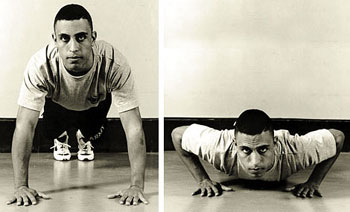 To increase your push ups, you should incorporate some sort of weight lifting workout. Increase the strength of your chest (pectoral) and triceps muscles will allow you to do more push ups. It is a myth that you can only train for push ups by doing push ups. You should supplement your push up variations workout by doing bench press (with a barbell or dumbbells) and triceps exercises such as pull downs or kick backs. Remember, a strong chest and strong triceps will give you strength in push ups.
Training only on push-ups and/or bench presses can lead to a strength imbalance. Pull-ups or some type of rowing work should be done with resistance or training partner.
When training, pay attention to proper form. Keep your body straight and rigid. Lower yourself or the weight in a controlled manner so that you can gain a training effect. During the test itself, however, to conserve energy and improve your performance, you should work at a much more rapid pace. When being tested, try to do as many repetitions as possible during the first 45 to 60 seconds.
Place your hands at shoulder width with your fingers pointing forward and slightly outward. Keep your heels and toes together. Do not forget to breathe during both training and testing. Change position of hands to a narrower or wider position after you are tired, then try to do some more push-ups.
Our push up improvement program is aimed at increasing your endurance and your strength at the same time. You are probably leading a pretty hectic life while also trying to improve your physical fitness. Now is when it is most important to consume an adequate supply of the necessary nutrients and stay hydrated. Help build solid muscle mass, supplement your diet with Whey Protein. Check out the latest offer: HUGE 25% OFF SALE at Bodybuilding.com – Act Fast! Save on a gazillion products!
There is no doubt that determination and the exercises listed on this page will help you increase your physical fitness test scores, however, doing this rigorous program requires commitment and discipline. The exercises are simple – they involve no sophisticated movements or machines. For maximum performance, check out Bodybuilding.com’s TOP 50 selling products. You can’t always control what you eat – especially if you are deployed to Iraq or Afghanistan – but, you can stack the odds in your favor by supplementing your diet with the right nutritional supplements.
For normal push-ups, the start position begins with the hands shoulder width apart, elbows fully extended, BODY straight and the feet together or up to 12 inches apart.
To complete a repetition, the trainee lowers his/her BODY , maintaining a straight back, until the upper arm is parallel with the ground, then returns to the start position. Once the two-minute push-up period has started, trainees may not lift their arms or legs off the ground. They may rest in the “start” position. They may also bend at the waist and the knees to relax the back, always maintaining 4-point contact with the ground. Before resuming push-ups, they must return to the start position.
Modified Push Ups Training
Modified Push Ups — Hands on an Object
POSITION. Keep your body straight. The balls of your feet should be on the ground, and your hands should be on a wall, a desk, or steps of a staircase. You can gradually increase the difficulty of the exercise by first placing your hands on the wall, later on a desk, then on a chair (or by progressing to lower stairs on a staircase). By progressing to lower levels of hand placement, you increase the intensity of the exercise and your muscle strength. By performing non-traditional push-ups such as these two modified push ups exercises, you are challenging your stabilizer muscles and training to a higher standard.
ACTION. This exercise involves the same action as the regular push-up. For instance, if your goal is 50 push-ups, do 40 modified push-ups; wait, do another 40; wait and do another 40. When this becomes easy, raise your sights and score.
Modified Push-Ups — Feet On An Object
POSITION. Keep your body straight with your hands on the ground and your feet on the chair, steps, or some object. Progressively elevate your feet to higher levels to increase the intensity. You may also increase the difficulty, hence your strength, by doing push-ups between chairs with your feet elevated and lowering yourself as far as your can between them. Do sets and repetitions as above. A lot of people will plant their feet on a flat bench in the gym – to increase the difficulty of this exercise and really work out your stabilizer muscles, try laying your feet on top of a Swiss Ball (inflatable exercise ball) in the gym.
ACTION. This exercise involves the same action as the regular push-up. Strive for three sets of 80% of your goal.
Muscle Milk Protein Supplement
Muscle Milk is an “evolutionary” muscle formula promoting efficient fat burning, lean muscle growth and fast recovery from exercise. Metabolically favorable ingredients stimulate growth and recovery in a similar manner to mother’s milk nourishing a baby. Muscle Growth and Repair: EvoProTM is a complex ratio of proteins, peptides and amino acids designed to replicate the amazing benefits of mother’s milk for rapid tissue growth and repair.


The Perfect Push Up
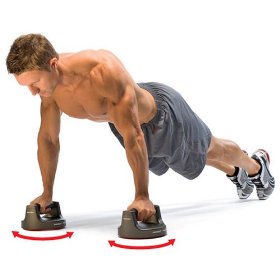 The Perfect Push Up puts a new spin on one of the oldest exercises, the pushup. Invented by someone who knows a lot about pushups, former U.S. Navy SEAL, Alden Mills, the Perfect Pushup’s rotating handles allow your arms to rotate naturally when you do pushups the same way they do when you throw a punch or press up a dumb bell. This unique feature accelerates results by engaging more muscles in the arms, chest, shoulders, and back. It also helps reduce strain on wrists and elbows, and helps to stabilize and strengthen the shoulder joint by engaging the scapular and rotator cuff muscles. You will notice the comfort and effectiveness of the Perfect Pushup on the very first try! Includes free instructional DVD and full color poster that show perfect form along with a customizable 21 day workout planner based in SEAL 2 minute drills that works for any fitness level – from beginner through Olympic athlete.
Just as you will find that you won’t be able to use quite as much poundage doing a twisting DB bench press rather than a non-twisting linear DB press, so with these twisting pushup bars you will find yourself being able to do fewer repetitions than with normal fixed push-up bars. That is really the main advantage of these “Perfect Pushup” devices: you don’t need to crank out as many reps to get to the same level of exhaustion. I normally can do around 30-40 reps per set with normal pushup bars, 50 reps per set with no bars just the ground, and only about 20-25 reps per set with these “perfect pushup” bars. This means you get a faster, more efficient workout. And if you are prone to rotator cuff issues, also a safer workout as long as you don’t space these bars too far apart. They work best at shoulder width and especially, closer in—which makes perfect sense, since if you were doing a twisting DB bench press you would hold the DBs much closer together than if you were doing a barbell bench press.
Find out more about the Perfect Push Up.
Other Push-Up Variations
Standard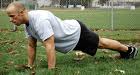
Lie facedown on the ground. Put your legs together. Place your hands on the ground, palms down, fingers pointed forward. Balance your weight on your palms and your toes. Your hands should be shoulder width apart. Keeping your body straight, lower your body by bending your elbows. Go down until your chest almost touches the ground. Return to starting position.
Elevated Push Ups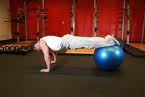
Same as the standard push-up, except you place your feet on a chair or Swiss ball or elevated surface. This allows you to hit your upper pecs more. Lower yourself until your chest almost touches the floor as you inhale. Using your pectoral muscles, press your upper body back up to the starting position and squeeze your chest. Breathe out as you perform this step. After a second pause at the contracted position, repeat the movement for the prescribed amount of repetitions.
Wide Push Ups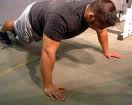
Same as the standard push-up, except hands are placed wider than shoulder width. This helps bring out your outer pectorals. Augment this chest-blasting exercise by adding barbell or dumb bell bench press or chest flyes. A lot of people neglect their chest workout when trying to increase their push ups.
Diamond Push Ups
Same as the standard push-up, except hands are positioned under the middle of your chest. Put your hands together so there looks like there is a diamond in between them (Index fingers touch each other and thumbs touch each other). This helps develop your inner pecs and your triceps.
Basketball Push Ups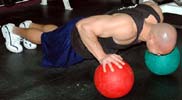
Same as the standard push-up, except you balance one hand on a basketball, medicine ball, or Swiss ball. This works stabilizer muscles.
Three-Point Push Up
Same as the standard push-up, except you put one foot on top of the other. So your points of contact are: 1.) left hand, 2.) right hand, and 3.) one foot while the other foot rests on its heel.
Deep Push Ups
Same as the standard push-up, except you need three chairs. Place the chairs so your feet are resting on one and your hands are on the others. Now you can go down farther than you could when doing push ups on the floor.
Plyometric Push Ups
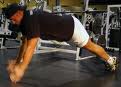 Stretch-Shortening Push-Ups – Drop yourself off a raised platform in a push-up position … to a pushup with a narrow hand position. You can also do explosive pushups by pushing yourself off the ground, landing, then repeating — or you can push up then clap your hands together as your body reaches its peak. Or have your partner push down on your back to increase resistance as you do your push up.
Special Ops Workout 
Mike Mejia and Stew Smith put together a comprehensive book detailing what it takes to be apart of the Special Forces community. Together, their knowledge, know-how, and grit lay the foundation for what it takes, physically and mentally, to screen for the Navy Seals, Army Special Forces and Air Force Special Forces. The exercises and workouts contained within give the reader a glimpse of what tools and abilities are needed to succeed and become a part of our Special Forces. I for one have used this book and another of Stew Smiths book while serving in Operation IRAQI FREEDOM. All the workouts allow me to stay in shape, keep the edge and ward off any boredom that creeps up in between missions and operations. This book is a must have, read, and heed for any individual wishing to become a part of America’s Special Forces.
Body for Life 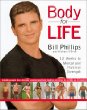
“Body For Life” is the most approachable, motivational, and effective fitness program I have encountered. Several of my male friends were getting in extremely buff while following this program, and their wives were getting into great shape, so I had to toss my skepticism aside and give it a try. Sure enough, even after 6 weeks, people were noticing that I looked “physically fit.” The book explains the workout process and the eating process in a clear, informative, and motivating manner, not only explaining how to work out and eat correctly, but WHY it must be done correctly. The book also contains many photographs demonstrating proper workout techniques, as well as lists of “proper” foods, and even some recipes!
The Ultimate Basic Training Guidebook 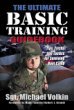
This book will prepare a recruit, mentally and physically, for basic training in the U.S. Army. It offers practical and unique solutions to challenges encountered by new recruits. Inside you’ll find an 8-week fitness program specifically designed to improve your fitness test scores, study guides, an instructional “How to…” chapter, a list of what to bring (and not to bring) to basic training, tips for success, and much more.


