
SEAL Indoctrination
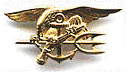 BUD/S indoctrination is five weeks in length. This is a mandatory course designed to give the student an understanding of the techniques and performance required of him. The first obstacle a student faces is the BUD/S Physical Screen Test. He must pass the test in order to class up and begin training. At the end of the indoctrination course, he will be given a more advanced version of the BUD/S Physical Screen Test that must be passed in order to enter the First Phase of BUD/S.
For detailed information regarding the Warning Order, SEAL training expectations and best ways to prepare, check out our Navy SEALs Training section. Also, check out our Navy SEALs Fitness Workout to prepare for BUD/s.
Naval Special Warfare Training – Following basic training at Recruit Training Command, Great Lakes, IL, and basic rating training, you will begin Basic Underwater Demolition/SEAL (BUD/S) Training in Coronado, CA. This six-month course of instruction will focus on physical conditioning, small boat handling, diving physics, basic diving techniques, land warfare, weapons, demolitions, communications, and reconnaissance.
SEALs undergo some of the most difficult training that is conducted by any military in the world. It takes more than a year of strict training in different environments before they are presented The Special Warfare Operator Naval Rating. After that there is 24 weeks of training for their rating in Basic Underwater Demolition and 28 weeks in SEAL Qualification Training. For SEALs chosen by the NSW, there is a Special Operations Combat Medic program for 26 weeks. It will take up to 30 months for a Navy SEAL to be ready for his first deployment.
BUD/S is extremely challenging testing a recruit physically, emotionally, and mentally. A big part of this training is endurance in the face of extreme temperatures and conditions, and while sustaining significant sleep deprivation. BUD/S is conducted at Naval Station Coronado, near San Diego, in the cold Pacific Ocean waters. Following graduation from BUD/S a new SEAL has follow-on training that includes airborne jump school, free-fall school, combat diving school, explosives and demolitions, small arms training, mountaineering training, and many other specialized courses.
Navy SEALs History
In 1962, President Kennedy believing that wars of the future would be low intensity conflicts (LIC) such as acts of terrorism and guerrilla warfare, created an elite unit of special operators. Experts in sea, air, and land operations, they are known as the Navy SEALs. Organized under the Navy Speclal Warfare Command (NAVSPECWARCOM) also known proudly as “WARCOM”, Navy SEALs have evolved from their predecessors — the Underwater Demolition Teams (UDT) of World War ll.
Organized into numbered SEAL Teams, the Teams are strategically located on both the West and East Coasts (odd numbered Teams on the West Coast, even numbered Teams on the East Coast). To become a Navy SEAL, a recruit must first pass the rigorous assessment and selection program known as BUD/S. BUD/S is widely thought of as the toughest formal school in the US military. Upon successful completion of BUD/S, a recruit is awarded the treasured SEAL “Trident” badge and bestowed the honor of being called a Navy SEAL.
Grown from the frogman roots of the UDT, today’s SEALs are not isolated to underwater or maritime operations. ln fact, many SEAL Teams operate quite far from any body of water – the (mountains of Afghanistan, South America, the Horn of Africa, Iraq, and during the Usama bin Laden raid, deep into the inland regions of Pakistan. They lend their expertise in special operations – specifically irregular warfare such as direct action (DA), special reconnaissance (SR), and clandestine infiltration. Additionally, SEALs have taken an active role in unconventional warfare including the training and capacity-building of foreign counter-terrorism forces. Today’s SEAL Teams are just as comfortable operating in the remote Konar Valley of Afghanistan as they are in the waters of the Indian Ocean.
Missions of the SEALs
 Although the Goldwater-Nichols act stated that all US Forces will be operationally controlled (OPCON) to the Joint Force Commander, Special Operations Forces (SOF) usually fall under their own chain of command underneath the Numbered Task Force Commander or Theater Special Operations Component (T-SOC) Commander. Navy SEALs usually make up one part of a Joint Task Force independently comprised of SOF ground and air forces with unique authorities, rules of engagement, and a streamlined intelligence collection, exploitation and analysis processes.
Today’s war is fought against a nation-less and enemy. This is no longer state-on-state warfare and SOF are the main players in today’s battles. Because the enemy is amorphous, often hiding within the civilian population and appearing as a fleeting target on the battlefield, special units such as SEAL Teams have proven invaluable due to their specialized training, flexibility, ability to adapt to time-sensitive targets, and capability to deploy globally – including denied and unwitting areas.
Navy SEALs are called on to do missions of strategic importance to the United States. They are trained to do the following missions.
Direct Action – Offensive strikes against an enemy target using tactics like raids, ambushes and assaults.
Special Reconnaissance – Surveillance and reconnaissance operations to report on enemy activity or to provide a better understanding of the operational situation. These missions can include tracking of enemy units, monitoring military and civilian activity, and gathering information about beach and water conditions prior to a beach landing.
Counter Terrorism – Directing action against terrorist groups to prevent terrorist activities.
Foreign Internal Defense – Training and assisting foreign counterparts to increase their capacity to respond to threats.
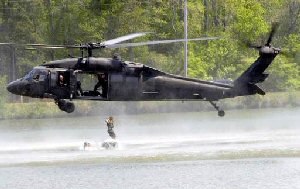
SEALs are interoperable with Army SF units, Rangers, and other Special Mission Units. SEAL Teams are versatile, able to infiltrate to a target area via numerous means. SEALs can infil via airdrop, by ground assault force (Humvee, Hilux, Stryker), by helicopter assault force, by various small maritime vessels (RHIB, Zodiac, Boston Whaler), by SEAL Delivery Vehicle (SDV), or by swimming in to shore. SEALs are trained to jump out of aircraft and perform both low-altitude and high-altitude paradrops – both static-line as well as free-fall jumps. Additionally, SEALs are comfortable jumping into water drop zones (DZ) as well as land DZs. Specialized Air Force aircrews are in even trained to airdrop SEAL boats, heavy equipment, then the SEAL Team itself into a water DZ in foreign or international waters.
SEAL operators are aided by Special Boat Units and a variety of support personnel, intelligence analysts, and embedded operators from the other services, including Air Force Pararescuemen. Want to join one of the most elite SOF units? Apply for a BUD/S slot- but train hard before you go. Make sure you are fit – be able to score an excellent on the Navy PRT as well as the SEAL PST. Sharpen your running endurance and speed – but don’t forget about the hardest task – swimming. Contrary to what most would think, the recruits that succeed at BUD/S are not the huge 6-foot tall linebackers – instead they have a more trim body composition with superior muscular and respiratory endurance.
Preferred Method of Insertion (Iraq / Afghanistan)
1. MH-47G Chinook Special Operations Helicopter (Heavy Lift, Helicopter Assault Force)
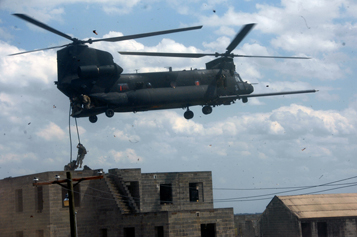 The Chinook variant used to transport small direct action teams such as Navy SEALs are flown by the 160th SOAR and is designated the MH-47G. This heavy-lift helicopter has the capability to conduct long distance missions in a wide range of environmental conditions including landing on and taking off from water. Because of its vast capabilities, the MH-47G is used to conduct infiltration, exfiltration (infil/exfil), parachute and shipboard operations. This helicopter, due to its larger troop carrying ability and faster air speed, is used to replace up to five Blackhawks for air assault missions in Afghanistan. Two MH-47Gs were used to refuel the Blackhawks that conducted the May 2011 raid on Bin Laden’s compound, carried the Quick Reaction Force (QRF), and to serve as backups. It was in this backup role that one MH-47G was used to carry the occupants of the crashed Blackhawk along with Bin Laden’s body to safety at the conclusion of the raid.
The MH-47G is equipped with advanced avionics systems that allow night vision goggle equipped pilots to accomplish low level overt and covert missions against hostile threats in all types of environments during low ambient light conditions. The terrain following/avoidance radar and forward looking infrared (FLIR) camera allows for pinpoint navigation at night and in marginal weather conditions. This aircraft is also equipped with a fast-rope rappelling system, in-flight refuel probe and the Common Avionics Architecture System (CAAS), a digital glass cockpit. The MH-47G cargo hook and 28,000 pound cargo capacity make it ideal for missions such as transporting light artillery pieces, resupply missions or Forward Area Arming and Refueling point operations as they did for the Bin Laden raid. The personnel location system enables the MH-47G to conduct combat search and rescue of downed aviators and others trapped behind enemy lines who are then retrieved using the special insertion and extraction system, a rescue hoist or rope ladder.
The MH-47G is protected by two 7.62mm mini guns, infrared (IR) jammers, chaff and flare dispensers.
2. MH-60M Black Hawk Special Operations Helicopter (Light Lift, Helicopter Assault Force)
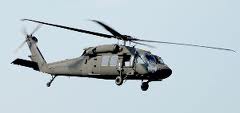 SEAL Teams will also infil/exfil via the special operations MH-60K helicopter operated by the Night Stalkers. This specially modified Blackhawk is equipped with upgraded engines, transmissions, FLIR and the CAAS glass cockpit. Additional internal fuel tanks, an aerial refuel system and the ability to mount external fuel tanks greatly extend the range of this helicopter which can operate from fixed facilities, remote forward locations or from aboard ship. It is protected by two electrically driven 7.62mm Gatling guns, IR jammers, radar warning systems, flare and chaff dispensers. It can also be equipped with AIM-92 Stinger missiles.
Because of its mission to penetrate hostile environments at night and at low altitude, the MH-60K is equipped with advanced inertial navigation system, FLIR and the AN/APQ-174 multi-mode terrain following and avoidance radar. This allows for accurate navigation during high speed, low level and low ambient light conditions during both overt and covert missions. It was this capability that was used extensively by Delta Force, CIA and joint forces in Afghanistan such as the operations against the Bin Laden/Taliban strong hold of Tora Bora and the penetration into Bagdad during Operation Iraqi Freedom. Today, the MH-60K operates from multiple locations in support of U.S. Central Command operations against Taliban insurgents in Afghanistan.
The MH-60K has the secondary missions of aerial resupply, external load, medical evacuation and combat search and rescue.
Find out more about the 160th Special Operations Air Regiment.
BUD/S Training Timeline
- Indoctrination (5 weeks)
- Basic Conditioning (8 weeks)
- Diving (8 weeks)
- Land Warfare (9 weeks)
- Basic Parachute Training (3 weeks)
- Receive Naval Special Warfare Classification – (NEC) Code
Physical Screening Test (PST)
REF: (a) MILPERSMAN 1220-100 Exhibit 1
- Overview:
- The Physical Screening Test is given to ensure that all applicants for SEAL program display a standard level of athletic proficiency before arriving at BUD/S. You should be in a progressive physical conditioning program to best prepare yourself for the demands of BUD/S training.
- The PST is a competition with yourself and you are encouraged to achieve your personal best in each event. The PST should neither be difficult nor demanding for the well trained candidate.
- SEAL PST
- 500-yard swim using breast and/or sidestroke in under 12 minutes and 30 seconds
10-minute rest - Perform a minimum of 42 push-ups in 2 minutes
2-minute rest - Perform a minimum of 50 sit-ups in 2 minutes
2-minute rest - Perform a minimum of 6 pull-ups (no time limit)
10-minute rest - Run 1 ½ miles wearing boots and long pants in under 11 minutes and 30 seconds.
- 500-yard swim using breast and/or sidestroke in under 12 minutes and 30 seconds
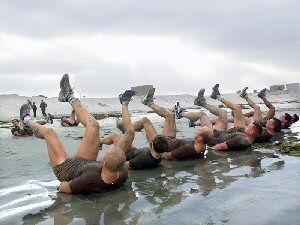
First Phase – Basic Conditioning
First Phase is eight weeks in length. Continued physical conditioning in the areas of running, swimming, and calisthenics grows increasingly difficult as the weeks progress. Students participate in weekly four-mile runs in boots, and timed obstacle courses. They swim ocean distances up to two miles in fins and learn small boat seamanship.
The first two weeks of First Phase prepare you for the third week, known as “Hell Week.” Students participate in five and one-half days of continuous training, with a maximum of four hours sleep for the entire week. This week is designed as the ultimate test of one’s physical and mental motivation while in First Phase. During Hell Week, you will learn the value of the mainstay of the SEAL Teams: TEAMWORK! The remaining five weeks are devoted to teaching methods of conducting hydrographic surveys, preparing hydrographic charts and instruction in basic maritime operations.
 Find out more about the Navy SEALs Fitness Standards
For detailed information regarding the Warning Order, SEAL training expectations and best ways to prepare, check out our Navy SEALs Training section. Deploying soon? Check out our Afghanistan Deployment Gear List and see for Special Operations Forces prepare for a deployment in support of Operation ENDURING FREEDOM.
Profile of a Navy SEAL
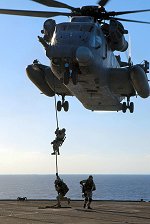 Navy SEALs are named after the environment in which they operate, the Sea, Air, and Land, and are the foundation of Naval Special Warfare combat forces. They are organized, trained and equipped to conduct a variety of Special Operations missions in all operational environments. Today’s SEALs trace their history from the elite frogmen of World War II. Training is extremely demanding, both mentally and physically, and produces the world’s best maritime warriors.
Our focus during this training is based on three core pillars:
- Men of Character: The nature of our mission requires men who will uphold the Navy Core Values – Honor, Courage, and Commitment.
- Physical: The nature of our mission also requires men who are physically fit and capable in every environment, especially the water.
- Technical: Finally, maritime Special Operations require SEALS who are intelligent and can quickly learn new tasks.
Today’s Naval Special Warfare operators can trace their origins to the Scouts and Raiders, Naval Combat Demolition Units, Office of Strategic Services Operational Swimmers, Underwater Demolition Teams, and Motor Torpedo Boat Squadrons of World War II. While none of those early organizations have survived to present, their pioneering efforts in unconventional warfare are mirrored in the missions and professionalism of the present Naval Special Warfare warriors.
Navy SEALs in The War on Terror
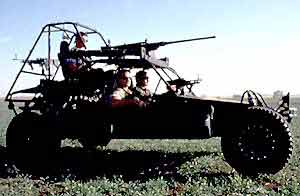 Navy SEALs have participated in some of the most famous operations in the current conflict – the global counter-terrorism war. Navy SEAL Petty Officer Neil Roberts was the first casualty of Operation ANACONDA when he fell from the MH-47 helicopter during infiltration. During Operation REDWING, a four-man SEAL Team led by Lt. Michael Murphy was on a long range reconnaissance mission in eastern Afghanistan when they came into contact with hundreds of enemy Taliban. The subsequent Quick Reaction Force (QRF) that was launched from Bagram Airbase via two MH-47 helicopters received overwhelming enemy ground to air fire in the Afghan mountains resulting in the shoot down of one of the MH-47s; in the end, there was one survivor of the Team – Petty Officer Marcus Luttrell. Navy SEALs helped rescue the Captain of the Maersk Alabama ship that was taken over by Somali pirates – SEAL snipers engaged the Somali captors and freed the Captain after an intense hostage standoff.
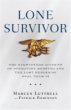
Lone Survivor
Four US Navy SEALS departed one clear night in June, 2005 for the mountainous Afghanistan-Pakistan border for a reconnaissance mission. Their task was to document the activity of an al Qaeda leader rumored to have a small army in a Taliban stronghold. Five days later, only one of those Navy SEALS made it out alive. This is the story of the only survivor of Operation Redwing, US Navy SEAL Petty Officer Marcus Luttrell, and the extraordinary firefight that led to the largest loss of life in American Navy SEAL history. Lt. Michael P. Murphy led the team of PO2 Luttrell, PO2 Dietz and PO2 Axelso. Luttrell fought valiantly beside his teammates until he was the only one left alive, blasted by an RPG into a place where his pursuers could not find him.
Over the next four days, terribly injured and presumed dead, Luttrell crawled for miles through the mountains and was taken in by sympathetic villagers who risked their lives to keep him safe from surrounding Taliban warriors. Murphy lead a four-man team tasked with finding a key Taliban leader in the mountainous terrain near Asadabad, Afghanistan, when they came under fire from a much larger enemy force with superior tactical position. Mortally wounded while exposing himself to enemy fire, Murphy knowingly left his position of cover to get a clear signal in order to communicate with his headquarters. While being shot at repeatedly, Murphy calmly provided his unit’s location and requested immediate support for his element. He returned to his cover position to continue the fight until finally succumbing to his wounds.
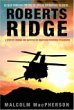
Roberts Ridge
Navy SEAL (Sea, Air, Land) Lt. Michael P. Murphy, 29, from Patchogue, NY. Murphy was killed by enemy forces during a reconnaissance mission, Operation Redwing, June 28, 2005. Murphy lead a four-man team tasked with finding a key Taliban leader in the mountainous terrain near Asadabad, Afghanistan, when they came under fire from a much larger enemy force with superior tactical position. Mortally wounded while exposing himself to enemy fire, Murphy knowingly left his position of cover to get a clear signal in order to communicate with his headquarters. While being shot at repeatedly, Murphy calmly provided his unit’s location and requested immediate support for his element. He returned to his cover position to continue the fight until finally succumbing to his wounds.
This is an account of a group of US Navy SEALS who are ambushed on a mountain in Afghanistan and require rescue by Army Ranger rapid response team. The Rangers are subsequently ambushed requiring yet another rescue team. The story is told from the perspective of the soldiers on the ground, facing unbelievably cold weather, horrible terrain and a lot of determined enemies. Quite a few don’t make it, but the story is more about the determination of these highly trained warriors to never leave a comrade behind. The action is quite detailed and the reader almost feels like he is there with the troops.
Navy Special Warfare (NAVSPECWAR)
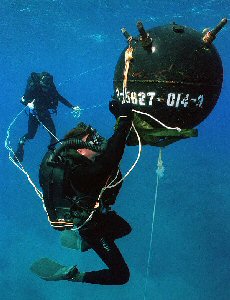 There are two groups of SEAL teams that are under the command of the NSW including Naval Special Warfare Group One and Three on the West Coast at the Naval Air Base Coronado, California and Group Two and Four on the East Coast based in Norfolk, Virginia. These teams are stationed around the world as Special Operations Task Forces or Naval Special Warfare Squadrons to meet the wartime requirements of the Global Combatant Commanders (GCCs). The Naval Special Warfare Center that is located at the Naval Amphibious Base in Coronado is the training facility for most naval Special Warfare training. It maintains a detachment at the Naval Amphibious Base in Virginia for training of personnel that are assigned to commands on the east coast.
The three types of personnel that are assigned to NSW are officers, enlisted Navy SEALS and Special Warfare Combat Craft Crewmembers. Officers take the same Basic Underwater Demolition Training that enlisted men take. The enlisted men are highly competent maritime special forces who strike from and return to the sea. Because they use well calculated stealth and clandestine methods of operation, they can conduct missions against targets that would be difficult for large forces.
The Naval Special Warfare Groups deploy SEAL Teams, Special Boat Teams, SEAL Delivery Vehicle Teams, support technicians, mobile communications teams, explosive ordnance disposal specialists and tactical cryptologic support world wide to meet the training, exercise, contingency and wartime requirements of theater commanders. With approximately 5,400 total active-duty personnel–including 2,450 SEALs and 600 Special Warfare Combatant-craft Crewmen (SWCC)–NSW forces are busier than ever answering “911 calls” from around the globe. NSW also calls upon a 1,200-person reserve of approximately 325 SEALs, 125 SWCC and 775 support personnel.
The primary skill sets are special reconnaissance and direct action for combating terrorism, and the NSW is ready to fight the enemy around the world, on land and sea before they have the opportunity to act. They have a continuous presence overseas where they deploy from Navy ships, aircraft, submarines and bases. NSW comprises less than one percent of U.S. Navy personnel, but their impact on enemies around the world is great because of their special training and ability to operate across a large spectrum of conflict.
Navy SEALs Combat Gear
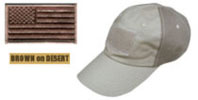
Condor Tactical Cap with Velcro Patch
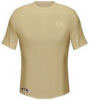
Under Armour Tactical
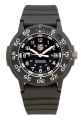
Navy SEALs Watch
The most important trait that distinguishes Navy SEALs from all other military forces is that SEALs are maritime special forces, as they strike from and return to the sea. SEALs (Sea, Air, Land) take their name from the elements in and from which they operate. Their stealth and clandestine methods of operation allow them to conduct multiple missions against targets that larger forces cannot approach undetected.
A routine SEAL mission, according to the Navy, might include free-fall parachuting from 10,000 feet, riding a small rubber boat for 100 miles, traveling 30 miles out to sea to rendezvous with a submarine.
Starting in the Vietnam War-era, when the elite force was officially created to combat guerrilla and terrorist tactics. Comprised of volunteers, the Navy SEALs are part of the Special Operations Forces that will play a pivotal role in the United States’ war on terrorism.
SEALs, like the Army Rangers and Green Berets, are experts in stealthy attacks, surveillance and penetration. Although Afghanistan is a land-locked country and the SEAL specialties highlight their water skills, SEALs still are expected to be factors, military analysts say.
Check out our new section on Navy SEALs Weapons.

Leadership Lessons of the Navy SEALs
This book is the most accessible leadership book I’ve read recently. It is presented as a case by case basis (The Mission) with lessons learned from it (The Take Away), albeit in a corny way.
Those who are military buffs will surely enjoy this book, however, the corporate world is a far different outfit. The best example from the book would be the case where the officers of the same rank were placed together to pitch a tent in the dark. Due to that, everyone was barking orders to each other in order to stand out and appear superior.
It is almost impossible to reprimand your subordinates without risking a resignation and the balance between enforcing your right as a superior and eliciting favors is a fine line. My philosophy of leadership is fairly simple. Lay down the expectations from day one, and hire those who can accept those expectations, never force someone to do something that they are not willing to do (Chapter 4, Lesson 1). You cannot trim down your troops through attrition in the corporate organization (no boot camps here) by piling so much work that your employees quit and only the best remain. There’s just not enough time and not enough people to complete any project implementation. Only a handful of organizations can do that ie. Nordstrom via psychological pressure rather than physical.
Chapter 3 focuses on building leadership, while chapter 4 focuses on being a grunt. 2 sides of the coin which are highly important. In summary, a must read. (Highly recommend, Built to Last).
SEAL BUD/S Training is demanding. Prepare yourself for your training, mentally and physically.
Set yourself up for success – excel at your new Navy SEALs Special Warfare career!


